
Uncategorized
Moonwin Casino – Blackjack Approach Handbook
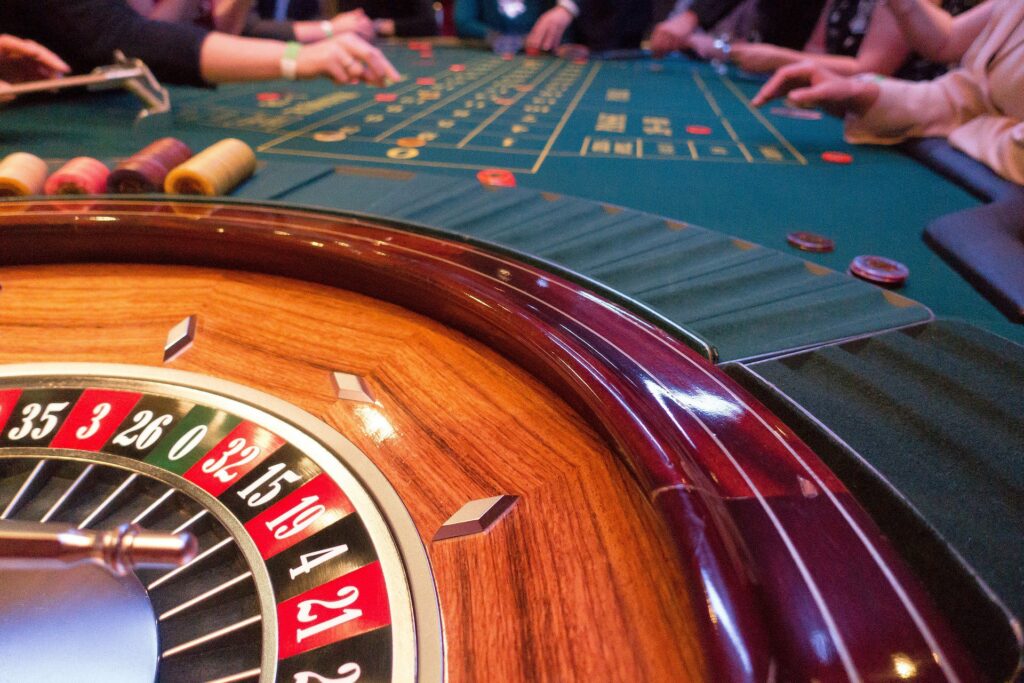
I have devoted countless hours at blackjack tables, both in physical casinos and on virtual sites, and I can assure you with certainty that this game compensates preparation more than virtually any other casino option. When I access Moonwin Casino and join a blackjack table, I do not depend on luck alone. I am relying on a structured decision-making framework refined over decades by mathematicians and professional players. This guide is my effort to share that framework with you in a manner that is instantly usable. I will walk you through the core principles of basic strategy, clarify why each choice counts, and demonstrate how to use these concepts directly inside the Moonwin Casino game library. Whether you are entirely unfamiliar to blackjack or have been playing for years, the information I present here will enhance your method and assist you in making better decisions at the table.
Understanding the Basis of Fundamental Strategy
When I talk about basic strategy in blackjack, I am pointing to a mathematically proven set of rules that tells you exactly how to approach every possible hand against every possible dealer upcard. This is not a collection of hunches or superstitions. It is the result of computer simulations that have studied millions of hands to determine the optimal move in each scenario. The objective of basic strategy is clear: it minimizes the house edge to its lowest possible point, often cutting it to less than half of one percent when the rules are favorable. At Moonwin Casino, I always verify the specific table rules before I sit down, because changes in things like the number of decks, whether the dealer stands on soft 17, and doubling restrictions can alter the optimal play slightly. Knowing that basic strategy exists and dedicating to learning it is the single most important step any player can take.
The beauty of basic strategy is that it eliminates emotion and guesswork from the equation entirely. I do not have to question whether I should hit my 16 against a dealer’s 10. The math has already resolved that question definitively. Over the long run, adhering to the strategy will not guarantee that I win every session, but it will make sure that I lose less money to the house edge than a player who makes decisions based on gut feeling. I have seen too many players stay on 15 against a dealer’s 7 because they are afraid to bust, not recognizing that the dealer is statistically likely to make a hand in that situation. Basic strategy provides me the certainty to make the correct play even when it feels uncomfortable. At Moonwin Casino, the digital interface makes it simple to take your time and refer to a strategy chart if you are still learning the decisions.
Rigid Hands and the Art of Deciding to Draw
A rigid hand in blackjack is any hand that is without an Ace counted as 11, or includes an Ace that is taken as 1 to prevent going over 21 https://moonwinscasino.ca/. These hands are inflexible and risky because a one unlucky hit can bust you. When I am dealt a hard hand, my main focus is the dealer’s upcard. If the dealer shows a 2 through 6, they are in a disadvantageous situation statistically, and my objective shifts to hoping the dealer breaks. I will hold on any hard total of 12 or greater in these spots, because the risk of breaking exceeds the potential benefit of making my hand better. The thinking is simple: the dealer will bust about 40 percent of the time when displaying a 5 or 6, so I choose to keep my hand and rely on that likelihood.
The calculus changes dramatically when the dealer shows a 7 or greater. Now the dealer has a powerful upcard and is likely to form a standing hand of 17 or above. Against a 7 through Ace, I have to be more aggressive with my own hand. I will hit any hard total of 16 or less against a dealer’s 7 or greater, because holding with a poor hand against a good dealer hand is a losing proposition in the long run. The most painful hand in blackjack is the hard 16 against a dealer’s 10. My entire being prefers to stay and hope the dealer busts, but the numbers indicates that hitting is the marginally better move. At Moonwin Casino, I keep in mind that I am playing a long game, and choosing the mathematically right play repeatedly is what keeps the house edge minimal.
Soft hand combinations and the Adaptability of the Ace
Soft hands feature an Ace counted as 11, which gives them a unique versatility that hands without an Ace lack. As the Ace can drop to a value of 1 when I draw a high card, I can hit soft hands boldly without any chance of exceeding 21 on a one card. This alters the complete strategic picture. If I hold a soft 13 up to 17, I usually hit when facing a dealer’s powerful upcard of 7 or more. The aim is to improve the hand to a higher total, as a soft 17 is just not viable against a dealer’s standing hand or strong draw. The protection of the Ace allows me to chase better outcomes that would prove far too hazardous with a hard hand of the equal total.
Doubling down on soft hands is an additional effective tool that I use often at Moonwin Casino. When the dealer shows a weak card such as a 5 or 6, I will double down on soft 13 up to 18 if the rules enable it. The logic is that I am probable to enhance my hand at the same time as the dealer is probable to bust, and doubling enables me to place more money on the table in a positive situation. A standard example is soft 17 versus a dealer’s 6. I am not happy with 17 here. I desire to double my bet and receive exactly one extra card, aiming to draw a 3, 4, or 10-value card that gives me a powerful total. The adaptability of the soft hand makes these assertive plays mathematically correct, and I have secured many bonus units by taking advantage of them.
Adapting Strategy to Various Rule Variations
Not all blackjack tables are made equal, and one of the first things I do when exploring the game selection at Moonwin Casino is study the specific rules of each table. The number of decks in play has a measurable impact on the house edge. A single-deck game with favorable rules can offer a house edge as low as 0.15 percent, while an eight-deck game with less good rules might push that edge above 0.6 percent. The difference may sound small, but over thousands of hands it adds up considerably. I also check whether the dealer stands on soft 17 or hits it. A dealer who stands on soft 17 gives the player a marginally better edge, and this rule alone can shift basic strategy decisions on hands like 11 against an Ace or soft 18 against a dealer’s 2.
Other rule variations that I examine include whether surrender is offered, whether doubling after splitting is allowed, and what the blackjack payout ratio is. A table that pays 6:5 for a blackjack instead of the traditional 3:2 dramatically increases the house edge and is one I generally avoid. Late surrender, when available, allows me to forfeit half my bet on particularly bad hands like hard 16 against a dealer’s 10, and this option marginally alters basic strategy. At Moonwin Casino, I like that the table rules are transparently displayed before I join, allowing me to select the most player-friendly conditions. I keep a mental checklist of rule priorities: 3:2 blackjack payouts, dealer stands on soft 17, and the ability to double after splitting are my non-negotiables.
Frequent Blunders That Diminish Your Edge
In my years of participating in and studying blackjack, I have documented a list of missteps that players commit often, often without recognizing how costly they are. The most widespread mistake is making decisions based on gut feeling rather than strategy. I have observed players stand on 12 against a dealer’s 2 because they are scared to bust, when the correct play is to hit. The dread of busting is psychologically powerful but numerically misguided. Another widespread error is taking insurance when the dealer shows an Ace. Insurance is a side bet that the dealer has a 10 in the hole, and it carries a house edge of over 7 percent in most games. I never purchase insurance unless I am counting cards, which is a different discipline entirely and not part of basic strategy.
Beyond these tactical errors, I see many players make fundamental mistakes in how they handle the game overall. Pursuing losses by increasing bet sizes after a losing streak is a quick track to exhausting a bankroll. Competing while tired, distracted, or under the influence of alcohol leads to sloppy decisions that negate hours of disciplined play. At Moonwin Casino, I view each hand as an isolated event and concentrate solely on making the optimal decision in the moment. I do not worry about the previous hand or the next one. Another less obvious mistake is failing to adjust strategy for specific rule sets. A basic strategy chart created for a multi-deck game where the dealer stands on soft 17 will not be completely optimal for a single-deck game with different rules. I always tailor my strategy to the table conditions.
Doubling Down and Optimizing Beneficial Spots
Increasing the wager is the mechanism that allows me to raise my wager mid-hand when the odds are firmly in my favour. When I double down, I pledge to getting exactly one more card and increasing my initial bet. The situations where this is correct are defined and well-defined. The most frequent doubling case is when I have a hard 11 against any dealer upcard except an Ace. With an 11, my probability of receiving a 10-value card and reaching 21 is extremely high, and I want to maximize my return in that position. Against a dealer’s poor card like a 5 or 6, I will also increase my bet on hard 9 and 10, because the dealer’s high bust chance combines with my powerful drawing spot to create a profitable chance.
I also give close consideration to soft doubling opportunities, which I discussed earlier. Apart from the standard hard totals, doubling on soft hands against low dealer upcards is a hallmark of expert basic strategy. At Moonwin Casino, I verify to understand the specific doubling regulations of the table I am playing. Some tables enable doubling on any two cards, while others confine doubling to particular totals. Some enable doubling after splitting, which is a player-friendly rule that I vigorously seek out. Every additional doubling chance I can take advantage of erodes at the house edge. I approach doubling with discipline. I never double down on a hunch or because I believe lucky. I act only when the mathematical probability is favorable, and I understand that even correct doubles will sometimes be unsuccessful.
Handling Your Bankroll Throughout Sessions
No blackjack strategy guide would be thorough without a serious discussion of bankroll management. I have discovered through experience that even perfect basic strategy cannot rescue a player who bets foolishly. Before I ever join a blackjack table at Moonwin Casino, I decide on a session bankroll that I am at ease losing entirely. This is money set aside exclusively for entertainment, and it never stems from funds needed for necessary expenses. I then divide that session bankroll into separate betting units. A common guideline I follow is to have at least 30 to 40 betting units per session. If my base bet is five dollars, I want a session bankroll of at least 150 to 200 dollars to absorb the natural swings of the game.
I also set strict win and loss limits for myself. A loss limit stops me from chasing losses and making a deeper hole when variance turns against me. A win limit guarantees profits and prevents me from giving back a successful session to the house. At Moonwin Casino, the platform provides tools that allow me to record my play and set personal limits, which I use regularly. I treat blackjack as a marathon, not a sprint. The house edge means that over a big sample of hands, the casino has a mathematical advantage. My goal is to appreciate the game, apply my strategy correctly, and occasionally walk away a winner during good variance swings. Disciplined bankroll management guarantees I can keep competing and appreciating the game for the long term.
The Strength of Separating Pairs Correctly
Splitting pairs is among the most misjudged aspects of blackjack, and I have seen many players make damaging mistakes in this domain. When I am given a pair, I have the option to split them into two separate hands, each with its own stake matching my first wager. The judgment to split should under no circumstances be founded on a wish to merely play more hands. It must be grounded in the statistical edge achieved by transforming one weak hand into two possibly stronger ones. The most important rule I follow is to always split Aces and Eights. Aces give me two chances to draw a 10-value card for a standard blackjack, while a pair of Eights creates a awful total of 16 that is converted into two hands beginning with a much more playable 8.
There are also pairs that I never split under any normal rules. I do not split Tens, because a total of 20 is currently an excellent hand that will win the overwhelming most of the time. Breaking it into two hands beginning with 10 is a pointless risk. Likewise, I never split Fives. A pair of Fives gives me a total of 10, which is a ideal initial point for increasing the bet against most dealer upcards. Dividing them would turn one strong hitting hand into two weak initial hands. At Moonwin Casino, the splitting rules are explicitly shown, and I always check whether I am authorized to double after split or resplit pairs, as these options add substantial strategic depth and can further reduce the house edge when employed correctly.
Building a Consistent Practice Routine

Mastering basic strategy is not an intellectual exercise that can be done by reading a chart once. It needs repetition until the correct decisions become automatic. I developed my own proficiency by using strategy drills and free-play modes extensively. At Moonwin Casino, I take advantage of any demo or low-stakes tables to practice without financial pressure. I start by targeting the most common hands: hard totals against dealer upcards of 2 through 6, then 7 through Ace. Once those are second nature, I move on to soft hands and pair splitting. I keep a strategy chart open in another window or on my phone during practice sessions, but my goal is to internalize the decisions so I no longer need to reference it.
I also advise varying the table rules during practice. Playing only one set of conditions can create blind spots when you encounter a different game. I practice on tables with and without surrender, with different numbers of decks, and with different soft 17 rules. This develops a deeper understanding of why certain plays change and prevents me from being caught off guard. At Moonwin Casino, the variety of blackjack offerings provides an excellent training ground. I set aside dedicated practice time each week, even when I am not planning to play for real money. Like any skill, blackjack strategy degrades without maintenance. Consistent, focused practice keeps my decision-making sharp and ensures that when I do sit down at a real-money table, I am playing as close to perfectly as possible.
FAQ
What’s the house edge in blackjack when applying perfect basic strategy?
When I use perfect basic strategy under standard favorable rules, the house edge usually ranges between 0.3 and 0.6 percent. This requires the dealer stands on soft 17, blackjack pays 3:2, and doubling after splitting is allowed. The exact number varies with the specific rule set of the table you are playing. This renders blackjack one of the lowest house edge games in the casino when played correctly.
Do I need to ever take insurance in blackjack?
I always avoid insurance when playing basic strategy. Insurance is a side bet that the dealer has a 10-value card under an Ace, and it has a house edge exceeding 7 percent in most multi-deck games. The only scenario where insurance becomes profitable is if you are an accomplished card counter who knows the remaining deck is heavily weighted toward 10-value cards. For the basic strategy player, it is invariably a losing proposition.
Which number of decks are best for a blackjack player?
When everything is the same, fewer decks are more favorable for the player. A single-deck game with advantageous rules can offer a house edge as low as 0.15 percent. However, casinos often change other rules to offset, such as paying 6:5 on blackjack instead of 3:2. I always focus on the blackjack payout and other player-friendly rules over the number of decks alone. A six-deck game with excellent rules can be better than a single-deck game with bad rules.
Can I use a strategy card while playing at Moonwin Casino?
Yes, using a basic strategy reference card is perfectly acceptable when playing online blackjack at Moonwin Casino. The digital format means you are playing at your own pace, and there is no dealer or pit boss to object to a strategy aid. I encourage new players to keep a strategy chart handy until the decisions become automatic. This is one of the major advantages of online play compared to a physical casino environment.
What’s the difference between hard and soft hands in blackjack?
A hard hand is any hand without an Ace, or with an Ace that must be counted as 1 to avoid busting. These hands are stiff and can bust with a single card. A soft hand contains an Ace counted as 11, giving it versatility because the Ace can drop to 1 if needed. This distinction is essential because the optimal strategy for hitting, standing, and doubling changes dramatically between hard and soft totals of the same numerical value.
Is it preferable to play blackjack on a mobile device or desktop at Moonwin Casino?
I have gamed a lot on both devices, and the moves remain the same no matter device. Moonwin Casino adjusts its blackjack tables for mobile play, with clear card displays and touch-friendly betting interfaces. The choice comes down to personal liking and comfort. I find mobile play excellent for shorter sessions, while desktop gives a bigger screen that can be useful when checking strategy charts during practice.
How long does it take to learn basic strategy completely?
With committed practice, most players can learn the essential decisions of basic strategy within 2–4 weeks. I suggest concentrating on the commonest hands first, then step by step adding the rarer scenarios. Using study cards, strategy apps, and the demo tables at Moonwin Casino speeds up the process significantly. The main thing is steady daily practice rather than marathon study sessions. Even 15 minutes a day of concentrated drills will produce noticeable improvement.
I have taken you through the complete framework of disciplined blackjack play, from the statistical bedrock of basic strategy to the nuanced adjustments demanded by different table rules. The knowledge is now yours, but knowledge without application is just trivia. My challenge to you is simple. Open the blackjack section at Moonwin Casino, select a table with player-friendly rules, and commit to making every single decision following the strategy I have laid out. You will make mistakes at first, and that is perfectly normal. What matters is that you acknowledge them and rectify them over time. The house edge is currently thin when you play correctly. Your job is to avoid widening it through unforced errors. Treat each hand as a fresh opportunity to execute the right play, and let the mathematics function in your favor over the long run.
